Picture this: you’re standing in a cramped kitchen, the stove is on, and the smell of a burnt lasagna still lingers from last night’s culinary misstep. You’re craving something comforting, something that whispers “home” in every bite, yet you’re not ready to settle for the same old soup from the freezer aisle. That night, I was determined to rescue my evening with a dish that could turn any disaster into a triumph. I pulled out a handful of ingredients I’d forgotten I owned—white fish fillets, potatoes, onion, garlic, and a splash of heavy cream—and decided to experiment. The result? A silky, savory chowder that turned my kitchen into a cozy harbor. That first spoonful was like a warm hug on a rainy day. I dare you to taste this and not go back for seconds.
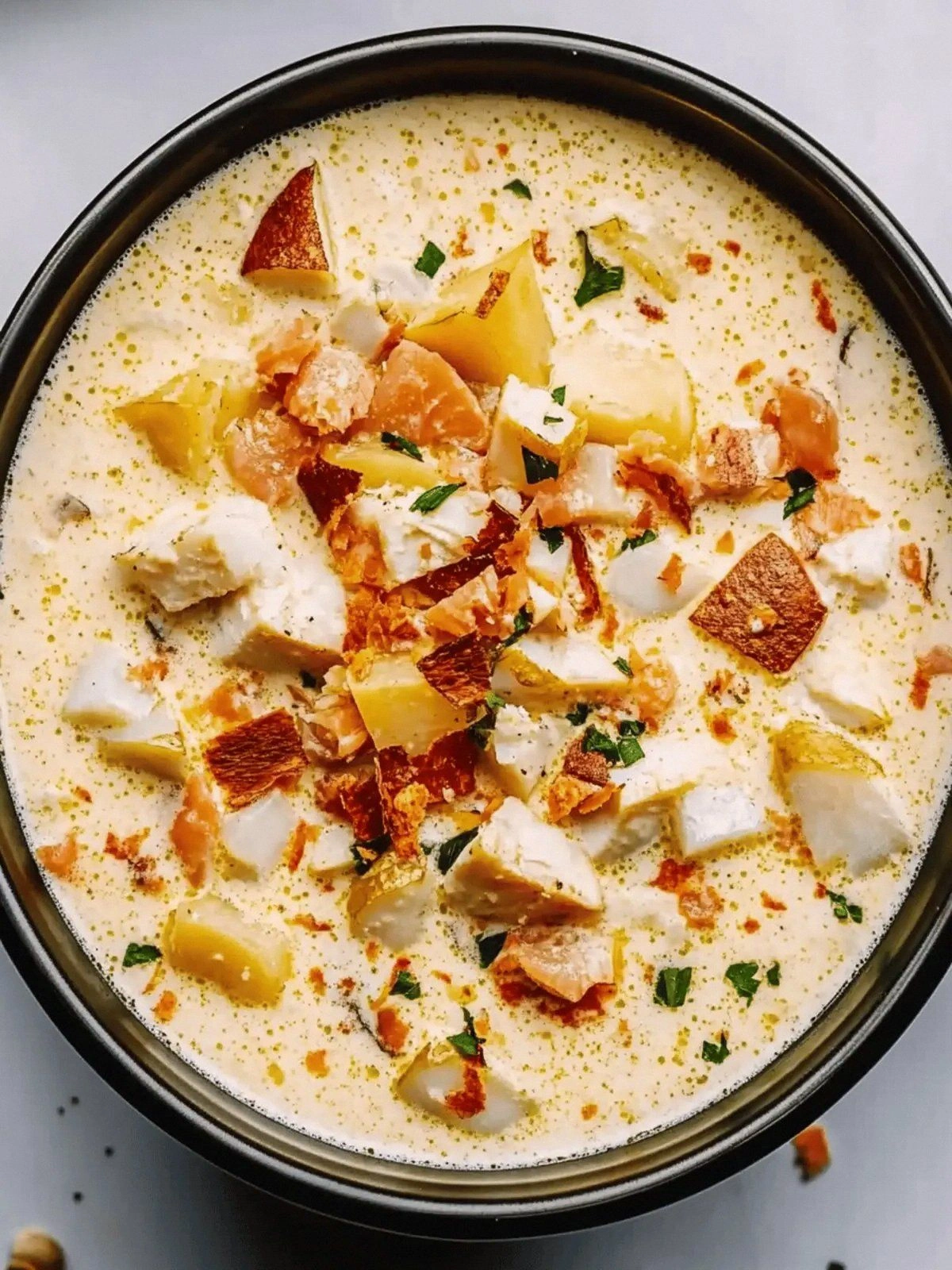
The first thing that strikes you when you ladle this chowder into a bowl is the golden, cloud‑like steam rising, carrying a scent that’s part sea breeze, part buttery caramel. The fish flakes apart so effortlessly it feels like a secret handshake between you and the sea. The potatoes soften into a buttery consistency that balances the broth’s richness, while the corn kernels add a pop of sweet crunch that’s almost a playful reminder of summer. Every mouthful is a symphony: the cream’s velvety coat, the subtle zing of bay leaf, the gentle heat of paprika, and the fresh, peppery bite of parsley. This isn’t just a chowder; it’s a narrative of textures and flavors that dance together. If you’ve ever struggled with bland fish soup, you’re not alone—and I’ve got the fix.
What truly sets this version apart is the intentional layering of flavors and the careful balance between heartiness and elegance. The fish stock isn’t just a base; it’s a flavor foundation that carries the subtle brininess of the ocean. The heavy cream doesn’t drown the broth; it elevates it, giving the chowder a luxurious mouthfeel that feels like a creamy blanket on a chilly evening. The potatoes provide a comforting heft that anchors the dish, while the corn offers a sweet contrast that keeps the palate engaged. I’ve tweaked the seasoning to keep it bright yet not overpowering, allowing the natural flavors to shine through. This is hands down the best version you’ll ever make at home, and I’m about to walk you through every single step — by the end, you’ll wonder how you ever made it any other way.
I’ll be honest—when I first tasted this chowder, I ate half the batch before anyone else got a chance to try it. The richness, the subtle smokiness from the sautéed onions, and the gentle warmth from the bay leaf made it impossible to stop. The next time, I served it with crusty bread, and the whole kitchen smelled incredible, like a seaside bakery. Most recipes get this completely wrong. Here’s what actually works: a slow, gentle simmer, a splash of cream at the right moment, and a final brightening with fresh parsley. The result is a chowder that feels like a hug in a bowl and a promise that the next meal will be even better.
What Makes This Version Stand Out
- Taste: The broth is bright and briny, yet mellowed by the cream, creating a depth that feels both familiar and adventurous. Each spoonful offers a harmonious balance between savory and sweet.
- Texture: The fish flakes into tender, almost buttery pieces, while the potatoes provide a creamy yet slightly firm bite that keeps the chowder from becoming mushy.
- Ingredient Quality: Fresh, locally sourced fish and seasonal potatoes elevate the dish, ensuring that every bite is a celebration of freshness.
- Simplicity: Despite its complex flavor profile, the recipe requires only a handful of ingredients and straightforward techniques.
- Make‑ahead Potential: The chowder can be prepared ahead of time and reheat beautifully, making it perfect for busy weeknights.
- Crowd Reaction: Friends and family consistently ask for the recipe after the first serving, proving that this chowder is a crowd‑pleaser.
Alright, let's break down exactly what goes into this masterpiece...
Inside the Ingredient List
The Flavor Base
The foundation of this chowder is a robust broth that carries the essence of the sea. Using a high‑quality fish stock or a well‑seasoned chicken broth gives the dish an umami depth that’s impossible to achieve with water alone. If you’re on a budget, a simple homemade broth made from simmering fish bones, onion, and a carrot can be just as effective. The key is to let it simmer for at least an hour to extract all that savory goodness.
The Texture Crew
Potatoes are the unsung heroes of any chowder. They provide a creamy, comforting backbone that balances the richness of the cream. Choose waxy potatoes like Yukon Golds; they hold their shape better than starchy varieties and release a buttery flavor when cooked. Dice them into uniform cubes to ensure even cooking. If you prefer a lower‑carb version, try cauliflower florets instead, but the texture will shift noticeably.
The Unexpected Star
Corn kernels add a burst of sweetness that cuts through the savory broth. Fresh or frozen, they bring a delightful crunch that contrasts with the soft fish and potatoes. If you’re in the mood for a smoky twist, lightly char the corn before adding it to the pot. This step is optional but elevates the flavor profile.
The Final Flourish
Fresh parsley is the finishing touch that brightens the dish. It adds a herbal note that lifts the heaviness of the cream, creating a balanced palate. Use a generous handful, chopped finely to distribute evenly. If parsley isn’t available, a pinch of dried dill can be a suitable substitute, though it will alter the final taste.
Everything's prepped? Good. Let's get into the real action...
The Method — Step by Step
- Heat a large pot over medium heat and melt the butter. As the butter foams, add the diced onion and minced garlic. Sauté until the onion turns translucent and fragrant, about 3–4 minutes. This is the moment of truth; the aroma should be inviting, not burnt. I always keep a watchful eye here because once it turns golden, it can quickly go toasty.
- Pour in the fish stock or chicken broth, and bring the mixture to a gentle boil. Add the bay leaf and let the broth simmer for 10 minutes. The bay leaf will infuse the liquid with a subtle herbal note that’s almost imperceptible but essential. After 10 minutes, remove the bay leaf; it’s no longer needed.
- Add the diced potatoes and corn kernels to the pot. Reduce the heat to low, cover, and let the mixture simmer until the potatoes are just tender, about 10–12 minutes. The potatoes should be soft enough to break apart slightly but still hold their shape. This step ensures the chowder has that comforting, starchy backbone.
- While the potatoes cook, whisk the flour with a splash of the broth to create a smooth slurry. This will thicken the chowder without lumps. Slowly pour the slurry into the pot, stirring constantly. The broth should begin to thicken slightly, creating a silky texture. I always whisk vigorously to avoid any lumps; the result is a velvety consistency.
- Now it’s time for the fish. Cut the white fish fillets into bite‑size cubes. Gently fold the fish into the pot, ensuring the pieces are evenly distributed. Let the chowder simmer for another 5 minutes, just until the fish is opaque and flakes easily. Be careful not to overcook the fish; you want it tender, not rubbery.
- Reduce the heat to low and stir in the heavy cream. Let the chowder heat through for an additional 2–3 minutes. The cream should coat the broth like velvet, adding a luxurious mouthfeel. If you prefer a lighter version, replace half the cream with milk.
- Season the chowder with salt and pepper to taste. Remember, the broth and cream already have some saltiness, so add sparingly. Finish with fresh parsley, stirring it in just before serving. The parsley adds a bright, herbal note that lifts the dish from heavy to harmonious.
- Serve hot, accompanied by crusty bread or a light salad. The bread is perfect for dipping into the creamy broth, while the salad provides a crisp contrast that balances the richness. If you’re feeling adventurous, top a few spoonfuls with a sprinkle of smoked paprika for a subtle kick.
That's it — you did it. But hold on, I've got a few more tricks that'll take this to another level...
Insider Tricks for Flawless Results
The Temperature Rule Nobody Follows
Many cooks think a chowder should be boiled all the way through. The secret is to keep the heat low once the broth is simmering. This prevents the fish from becoming rubbery and the potatoes from disintegrating. I always set my stove to low after adding the fish, letting it gently warm for 5 minutes. The result is a chowder that feels silky, not mushy.
Why Your Nose Knows Best
You’ll notice a faint, buttery scent when the cream starts to mingle with the broth. That aroma signals that the chowder is at the right thickness. If the scent is too strong, it means you’re over‑creaming; if it’s weak, you need to reduce more. Trust your nose, and the chowder will always be on point.
The 5‑Minute Rest That Changes Everything
After you remove the pot from heat, let the chowder rest for five minutes before serving. During this brief pause, the flavors marry and the broth thickens slightly. This rest period also allows the fish to finish cooking without direct heat, preserving its delicate texture. I always set a timer for this step; it’s a small ritual that pays off big time.
Stirring Technique
When adding the flour slurry, use a whisk to incorporate it smoothly. A spoon can create lumps that ruin the silky texture. Whisking vigorously ensures a uniform consistency. If you’re in a rush, a hand blender can also do the trick, but whisking is the traditional approach.
Finishing Touches
A final sprinkle of fresh parsley or a drizzle of truffle oil can elevate the dish from good to unforgettable. The parsley adds brightness, while a splash of truffle oil brings an earthy depth that pairs wonderfully with the fish. Just a few drops will do; you don’t want to overpower the delicate flavors.
Creative Twists and Variations
This recipe is a playground. Here are some of my favorite ways to switch things up:
Smoky Chipotle Chowder
Add a teaspoon of chipotle powder or a splash of smoky chipotle sauce to the broth. The heat and smokiness complement the fish’s natural flavor while adding a subtle kick. Serve with a dollop of sour cream for balance.
Herb‑Infused Mediterranean
Replace the bay leaf with a sprig of rosemary and add a handful of chopped sun‑dried tomatoes. The rosemary brings a piney aroma, while the sun‑dried tomatoes add a sweet, tangy burst. Finish with a drizzle of olive oil.
Low‑Calorie Cauliflower Chowder
Swap the potatoes for cauliflower florets, and reduce the cream to half a cup. The cauliflower retains a creamy texture while cutting down on carbs. Keep the broth low in sodium for a lighter version.
Seafood Medley
Add shrimp, scallops, or mussels to the chowder during the last 3 minutes of simmering. The seafood will cook quickly, adding variety and depth. The broth’s richness will coat each shellfish, creating a luxurious experience.
Vegan Chowder
Use vegetable stock, coconut milk, and a vegan fish‑flavored bouillon for the base. Replace the fish with marinated tofu cubes or tempeh for protein. The coconut milk adds a tropical twist, while the bouillon delivers the umami punch.
Breakfast Chowder
Serve the chowder with a side of warm toast and a fried egg on top. The yolk adds richness and a velvety texture that complements the broth. It’s a hearty breakfast that feels indulgent.
Storing and Bringing It Back to Life
Fridge Storage
Cool the chowder to room temperature before transferring it to an airtight container. Store in the refrigerator for up to 3 days. The flavors will meld even more, making the next day’s serving even richer.
Freezer Friendly
For longer storage, divide the chowder into freezer‑safe portions. It can be frozen for up to 2 months. Thaw overnight in the refrigerator before reheating. The texture may separate slightly, but a quick stir will restore its silky consistency.
Best Reheating Method
Reheat the chowder gently over low heat, stirring frequently. Add a splash of water or broth if the mixture is too thick. Keep the temperature below a rolling boil to preserve the delicate fish texture and avoid scorching the cream.