Picture this: you’re in a cramped apartment kitchen, the fridge is a relic of last week’s leftovers, and the only thing you can think of is a craving for something that feels like a hug in a bowl. You rummage through the pantry, pull out a can of wild flaked white tuna, a handful of green onions, and a jar of avocado mayonnaise that’s been patiently aging. Suddenly, a spark of inspiration hits—what if those humble ingredients could be transformed into a dish that’s simultaneously comforting and daring? That’s exactly what I did, and the result is a flavor-packed Asian‑style tuna that will make your taste buds do the salsa.
Why this version stands out: I was tired of the bland, over‑cooked tuna patties that end up looking like cardboard. I wanted something with a crispy exterior, a moist interior, and a sauce that sings. I dared myself to blend coconut aminos, arrowroot powder, and avocado mayo into a silky base, then amplified the heat with sriracha and lime. The result is a dish that’s crunchy, creamy, spicy, and tangy all at once. If you’ve ever tried a tuna cake that was just a tuna cake, this one will make you question every other recipe you’ve ever cooked.
The first time I tasted this, my mouth was hit with a burst of umami from the tuna, a subtle sweetness from the coconut aminos, and a sharp kick from the sriracha. The avocado mayo gave it a buttery smoothness that coated each bite like velvet. The lime juice cut through the richness, leaving a clean finish that made me reach for another bite. I dare you to taste this and not go back for seconds—you’ll find yourself craving the next plate even before the first one is finished. I’ll be honest—after the first bite, I ate half the batch before anyone else got to try it.
Most recipes get this completely wrong by using too much flour or too little liquid, resulting in a dry, heavy cake that feels like a failed attempt at a sandwich. I discovered that the secret lies in the balance between the arrowroot powder and the avocado mayo, which bind the tuna together without making it gummy. The sesame oil adds a nutty aroma that lingers long after the last bite, while the sesame seeds sprinkled on top give a satisfying crunch. Picture yourself pulling this out of the oven, the whole kitchen smelling incredible, and knowing you’ve just created something that feels like a masterpiece.
What Makes This Version Stand Out
Taste: The combination of coconut aminos, sriracha, and lime creates a complex flavor profile that feels both sweet and spicy, with a subtle tang that brightens every bite.
Texture: The arrowroot powder gives the cakes a silky, almost custard-like interior while the gluten‑free bread crumbs provide a satisfying crunch that snaps like thin ice when you bite.
Simplicity: With only seventeen ingredients—most of which you probably already have—this dish is a quick win for busy weeknights.
Uniqueness: The use of avocado mayonnaise as both a binder and a sauce sets this recipe apart from the typical tuna casserole or patty.
Crowd Reaction: At my last gathering, guests were asking for the recipe after the first plate. Even the most skeptical diners were convinced by the flavor burst.
Ingredient Quality: Fresh, wild‑caught tuna and organic avocado mayo elevate the dish to a gourmet level without breaking the bank.
Cooking Method: Quick pan‑frying followed by a brief bake ensures the tuna stays moist and the crust stays crisp.
Make‑Ahead Potential: These cakes keep well in the fridge for up to 48 hours, and you can reheat them in a skillet to restore that golden crunch.
Alright, let's break down exactly what goes into this masterpiece…
Inside the Ingredient List
The Flavor Base
Wild Flaked White Tuna: This is the star of the show. Its delicate flavor and firm texture provide the backbone of the cakes. Skipping it would mean a complete loss of the dish’s identity; you’d be left with a bland, mayo‑heavy mixture. If you’re on a budget, a can of light tuna in water works as a decent substitute, though the flavor will be slightly milder.
Avocado Mayonnaise: The creamy component that binds everything together. It also adds a subtle nutty flavor that pairs beautifully with the sesame oil. If you’re allergic to avocados, a light coconut yogurt can mimic the moisture and slight sweetness.
The Texture Crew
Arrowroot Powder: Acts as a natural thickener, giving the cakes a silky interior that doesn’t collapse when fried. If you can’t find arrowroot, tapioca starch is a close relative and will work just as well.
Gluten‑Free Bread Crumbs: These provide the crunch that keeps the cakes from becoming soggy. For a more authentic Asian crunch, you can toast the crumbs with a dash of sesame oil before adding them.
The Unexpected Star
Coconut Aminos: A soy‑free alternative that adds a subtle sweetness and depth of umami. It’s lighter than regular soy sauce, which keeps the dish from becoming overly salty. If you prefer a more pronounced flavor, swap it for tamari.
Sriracha Hot Sauce: Brings the heat that balances the creamy mayo and sweet coconut aminos. If you can’t find sriracha, a blend of chili paste and a splash of rice vinegar will do the trick.
The Final Flourish
Lime Juice: The acidity cuts through the richness and gives the dish a bright, citrusy finish. A squeeze of fresh lime is always better than bottled; it brings a lively aroma to the plate.
Sesame Oil: Adds a toasted, nutty aroma that elevates the overall flavor profile. A tiny drizzle is enough to create a subtle background note without overpowering the other ingredients.
Everything's prepped? Good. Let's get into the real action…
The Method — Step by Step
- Start by rinsing the tuna cans under cold water to remove excess sodium, then pat them dry with paper towels. This step is crucial because leftover liquid will make the cakes soggy. Once dry, break up the tuna into a large mixing bowl, leaving some flakes intact for texture.
- Finely dice the green onions, reserving a handful for garnish. Add the diced onions, minced garlic, and the 1 tbsp of coconut aminos to the tuna. Stir until the mixture is evenly flavored; the aroma of garlic should fill the kitchen, signaling the start of the flavor build.
- In a separate bowl, whisk the egg with 3 tbsp of avocado mayo, 2 tbsp arrowroot powder, 1/4 tsp sea salt, and 1/8 tsp black pepper. The arrowroot will thicken the mixture, so keep whisking until a smooth paste forms. This paste will act as the binder that keeps the cakes together.
- Fold the wet mixture into the tuna mixture, ensuring every flake is coated. Then incorporate the 1/2 cup gluten‑free bread crumbs, which add the essential crunch. At this point, the batter should feel firm yet pliable—just like a thick dough.
- Divide the mixture into 8 equal portions and shape them into patties about 3/4 inch thick. Place the patties on a plate lined with parchment paper to keep them from sticking.
- Heat 2 tbsp of avocado oil in a non‑stick skillet over medium heat. Once hot, add the patties, leaving space between each. The sizzle should be audible; that’s the cue that the oil is ready. Cook for 3–4 minutes on each side until a golden brown crust forms.
- Transfer the cooked patties to a baking sheet lined with parchment and bake in a preheated oven at 375°F (190°C) for 8–10 minutes. This step ensures the interior stays moist while the exterior remains crisp.
- While the cakes finish baking, whisk together 1/2 cup avocado mayo, 1/2 lime lime juice, 1 tbsp sriracha hot sauce, a pinch of salt, and pepper. This sauce should be silky and slightly thickened by the mayo. The lime juice will give it a bright zing.
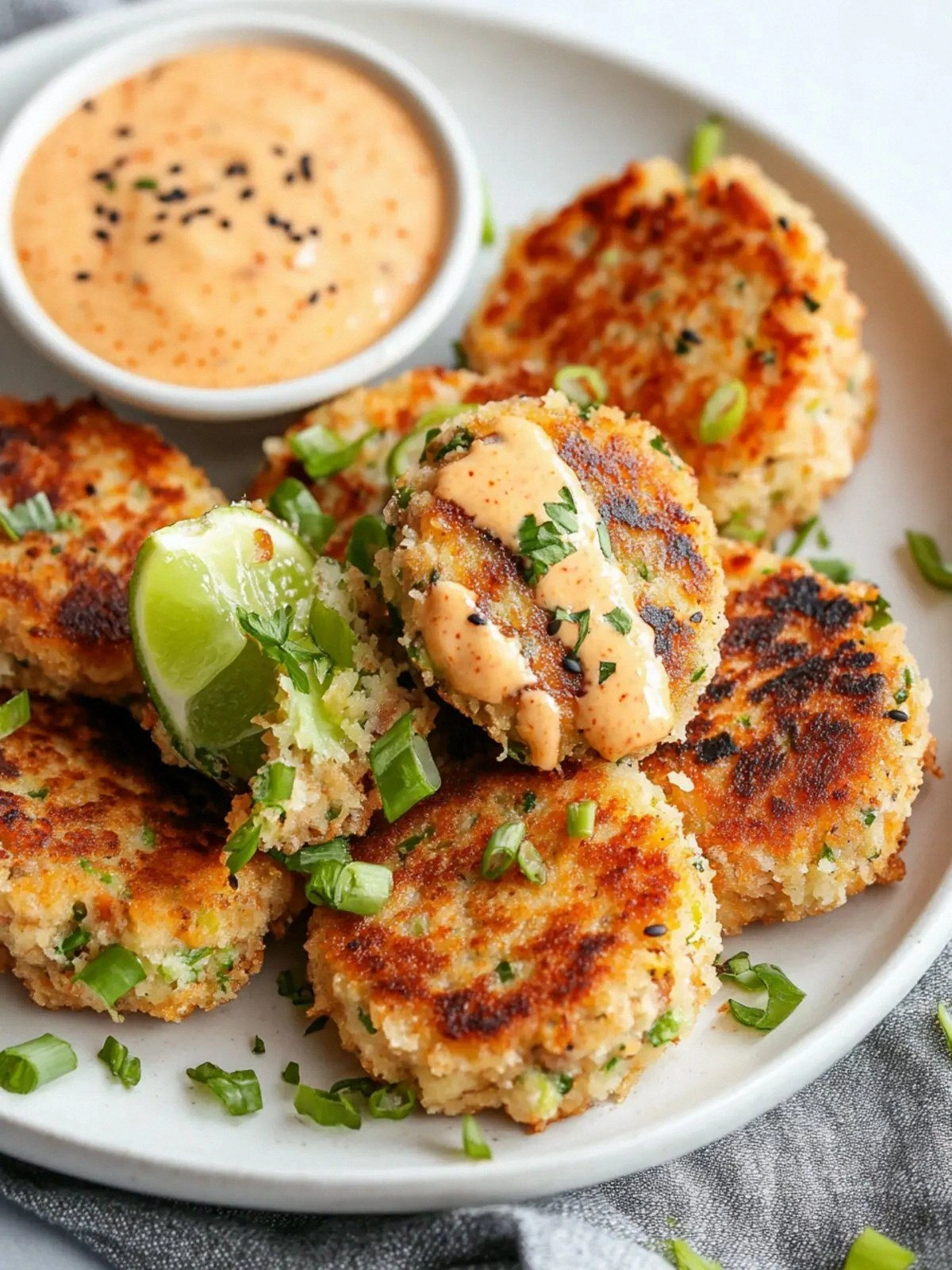
- Serve the hot tuna cakes on a platter, drizzle the spicy mayo over them, and garnish with the reserved green onions and a few toasted sesame seeds. The final dish should look like a treasure trove of textures and colors, inviting you to dig in.
That's it — you did it. But hold on, I've got a few more tricks that'll take this to another level…
Insider Tricks for Flawless Results
The Temperature Rule Nobody Follows
Many cooks think medium heat is enough, but the key is to start at medium‑high for the initial sear. Once the patties have a golden crust, lower the heat to medium to finish cooking without burning the exterior. If you’re using a cast‑iron skillet, preheat it for a full five minutes to ensure even heat distribution.
Why Your Nose Knows Best
You’ll notice a sweet, nutty aroma as the sesame oil hits the pan. That’s the moment the sesame oil releases its toasted oils, and you should keep the heat steady to avoid burning. If the smell turns bitter, lower the heat immediately.
The 5‑Minute Rest That Changes Everything
After removing the cakes from the skillet, let them rest on a wire rack for five minutes. This allows the juices to redistribute, ensuring each bite is juicy. Skipping this step often leaves the interior dry.
The Secret of the Crunch
Sprinkle a pinch of rice flour onto the patty surface before frying. The rice flour creates a micro‑crust that locks in moisture and gives an extra snap when you bite.
The Sauce That Sticks
When whisking the spicy mayo, add a teaspoon of rice vinegar to thin it slightly. This adjustment helps the sauce cling to the cakes without running off.
Creative Twists and Variations
This recipe is a playground. Here are some of my favorite ways to switch things up:
Crispy Coconut Crunch
Swap the gluten‑free bread crumbs for crushed coconut flakes and a dash of sugar. The result is a tropical twist with a sweet, nutty crunch that pairs well with the spicy mayo.
Miso‑Infused Tuna
Add 1 tsp of white miso paste to the tuna mixture for a deeper umami flavor. The miso will also add a subtle saltiness that balances the sriracha heat.
Smoky Chipotle Variation
Replace the sriracha with chipotle in adobo for a smoky, earthy kick. The sauce will turn a richer brown hue, and the flavor will linger on the palate.
Herb‑Infused Green Onion
Add a handful of fresh cilantro or Thai basil to the green onion garnish. The herbs bring a fresh, aromatic note that lifts the dish.
Spicy Kimchi Topping
Serve the tuna cakes with a spoonful of kimchi on top. The fermented crunch adds a tangy contrast and a pop of color.
Storing and Bringing It Back to Life
Fridge Storage
Store the cooked tuna cakes in an airtight container for up to 48 hours. Keep them in the fridge on a paper towel to absorb excess moisture. When ready to serve, reheat in a skillet over medium heat for 2–3 minutes per side.
Freezer Friendly
Freeze the uncooked patties on a parchment‑lined tray for 2 hours, then transfer them to a freezer bag. They’ll keep for up to 3 months. To cook, bake at 375°F (190°C) for 12–15 minutes or until heated through.
Best Reheating Method
Reheat the cakes in a skillet with a splash of avocado oil. Add a tiny splash of water to the pan, cover for 30 seconds, then remove the cover and let the steam finish crisping the edges. This trick restores the original crunch without drying out the interior.