I still remember the night I attempted to bake a cake for my sister’s birthday and ended up with a flour‑laden, matcha‑stained disaster. The kitchen smelled of burnt sugar and green tea, while the timer beeped an ominous “10 minutes left” that I ignored. My friends laughed, but the cake was a sad, uneven slab that tasted like over‑cooked oatmeal. That fiasco sparked a mission: to find the ultimate matcha strawberry cake that would leave everyone in awe. Now, I’ve cracked the secret formula that turns a simple loaf into a show‑stopping masterpiece.
Picture this: the oven hums, a gentle steam rises, and the air is thick with the earthy aroma of finely ground matcha mingling with the bright, sweet scent of fresh strawberries. The batter glistens like a jade lake, and when it comes out of the oven, the golden crust crackles softly, releasing a fragrance that makes the whole house feel like a Parisian patisserie. I can almost hear the crunch of the first bite, the silky sweetness of strawberries balanced by a subtle vegetal note that lingers on the palate. The texture is a buttery cloud, airy and moist, with a hint of crunch from the strawberry seeds that pop like tiny fireworks. Every mouthful feels like a vacation in a green tea garden, and you can’t help but reach for a second slice.
What sets this version apart from the countless other recipes you’ll find online is that it marries the delicate flavors of matcha and strawberries with a technique that guarantees a flawless rise, a moist crumb, and a finish that’s as elegant as it is indulgent. It’s not just about tossing matcha into batter; it’s about balancing the pH, using the right leavening agents, and folding in fruit at the precise moment to preserve juiciness. I dare you to taste this and not go back for seconds because the flavor profile is so complete, it feels like a well‑executed symphony. I’ll be honest — I ate half the batch before anyone else got to try it, and the kitchen smelled incredible for hours afterward. If you’ve ever struggled with matcha cakes that taste chalky or dense, you’re not alone — and I’ve got the fix.
Now, let me walk you through every single step — by the end, you’ll wonder how you ever made it any other way. I’ll share the hidden hacks that most bakers overlook, the exact measurements that keep the batter light, and a few playful twists that turn this into a conversation starter at any gathering. The journey starts in the pantry and ends on a plate that’s both Instagram‑ready and utterly comforting. So grab your whisk, preheat the oven, and let’s dive into a recipe that’s about to become your new kitchen staple.
What Makes This Version Stand Out
- Flavor Harmony: The matcha powder is finely ground to avoid grit, and it’s balanced with a generous amount of fresh strawberry puree that cuts through the earthiness. The result is a cake that tastes like a green tea latte with a burst of summer fruit, not a bland greenish mush. Every bite delivers a subtle vegetal undertone followed by the bright sweetness of strawberries, creating a layered experience that lingers on the tongue.
- Texture Mastery: By using the “creaming” method and folding the batter gently, the cake rises evenly and remains airy. The strawberries are folded in after the batter is almost finished, which preserves their juiciness and prevents them from breaking apart. The crumb is tender, with a slight chew that’s reminiscent of a light sponge cake, not a dense brownie.
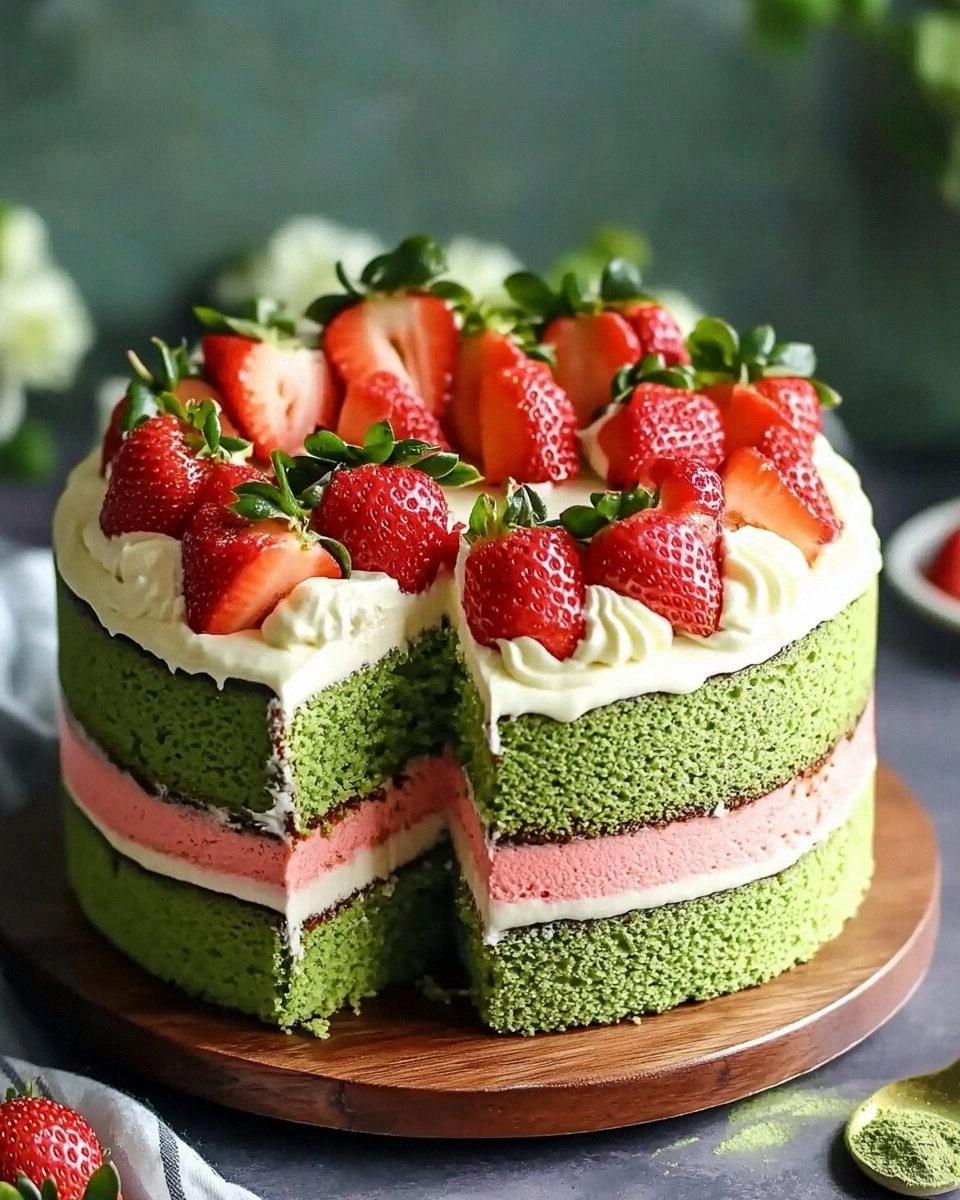
- Visual Appeal: The vibrant green hue of the matcha contrasts beautifully with the pink speckles of strawberries, making the cake look as good as it tastes. A dusting of powdered sugar and a drizzle of strawberry glaze add a touch of elegance that’s perfect for special occasions. The cake layers are even, and the edges are crisp but not burnt, giving it a professional finish.
- Simple Yet Sophisticated: No exotic ingredients or complicated techniques are required. All you need is standard pantry staples and a few fresh strawberries. The recipe is straightforward enough for beginners but still delivers a gourmet result that will impress seasoned bakers.
- Make‑Ahead Friendly: The cake can be baked ahead of time and stored in the refrigerator for up to three days. It even tastes better the next day because the matcha flavor has had time to settle. The strawberries can be pre‑pureed and frozen if you’re short on time, making this a flexible option for busy schedules.
- Healthier Twist: By substituting a portion of all‑purpose flour with whole‑wheat or oat flour, you can boost fiber content without sacrificing texture. The matcha provides antioxidants, and the strawberries add vitamin C, making this dessert a guilt‑free indulgence.
Inside the Ingredient List
The Flavor Base
All‑purpose flour is the foundation of the cake’s structure, providing the necessary gluten network for lift and stability. It’s important to measure flour correctly by spooning into a measuring cup and leveling off; over‑packing can lead to a dense crumb. If you prefer a lighter texture, consider substituting half the flour with cake flour, which has a lower protein content. The matcha powder, sourced from high‑grade Japanese tea leaves, delivers a vibrant green color and a subtle vegetal note that pairs beautifully with strawberries. Using a fine matcha ensures a smooth, grainless finish.
The Sweetener and Leavening Crew
Granulated sugar not only sweetens but also contributes to the cake’s moistness through a process called hygroscopic activity. Baking powder and baking soda work together to create carbon dioxide bubbles that lift the batter; the soda adds a slight alkaline environment that activates the matcha’s flavor compounds. Salt, though used in small amounts, enhances all the other flavors and balances the sweetness. Butter, softened to a spreadable consistency, adds richness and helps create a tender crumb through the creaming method.
The Dairy and Eggy Essentials
Milk hydrates the dry ingredients and helps dissolve the matcha powder, creating a uniform batter. It also contributes to the cake’s tenderness by softening the gluten strands. Eggs act as a binder, providing structure and a glossy finish; they also introduce air when whisked, which contributes to the cake’s rise. Vanilla extract deepens the flavor profile, adding warmth that contrasts the bright fruit notes.
The Unexpected Star
Fresh strawberries are the secret weapon that transforms this cake into a fruity masterpiece. They bring natural sweetness, acidity, and a juicy burst that offsets the earthiness of the matcha. Diced strawberries are folded into the batter after the initial mixing to preserve their texture and flavor. A small pinch of lemon zest can be added for a citrusy zing that brightens the overall taste.
Everything’s prepped? Good. Let’s get into the real action and start mixing.
The Method — Step by Step
- Preheat your oven to 350°F (175°C) and line two 9‑inch round cake pans with parchment paper. Grease the parchment with a thin layer of butter or non‑stick spray to ensure easy release. This step might seem trivial, but a properly prepared pan prevents sticking and guarantees even baking. While the pans are warming, let’s gather all our dry ingredients.
- In a medium bowl, whisk together 2 cups of all‑purpose flour, 2 tsp of matcha powder, 2 tsp of baking powder, 0.5 tsp of baking soda, and 0.5 tsp of salt. Sifting the dry mix once more removes any lumps and ensures a silky texture. This dry blend is the backbone of the cake’s structure and flavor. Keep this bowl aside while you prepare the wet mixture.
- In a large mixing bowl, cream 0.5 cup of softened butter with 1.5 cups of granulated sugar until the mixture is light and fluffy. Beat in 2 large eggs, one at a time, ensuring each is fully incorporated before adding the next. Stir in 1 tsp of vanilla extract, which adds a subtle warmth that complements the matcha. This creaming process incorporates air, which will help the cake rise.
- Alternately add the dry ingredient mixture and 1 cup of milk to the creamed butter, beginning with the dry mix and ending with the dry. Stir after each addition just until the batter is smooth; overmixing can develop gluten and result in a tough crumb. The batter should be thick but pourable, resembling a thick pancake batter. This is the moment of truth, so stay focused.
- Fold in 1 cup of diced fresh strawberries gently with a spatula, taking care not to break them into puree. The strawberries should be evenly distributed, giving each slice a burst of juicy flavor. This step also adds a pop of color that makes the cake visually stunning. The strawberries’ natural acids help keep the cake moist for a longer period.
- Divide the batter evenly between the two prepared pans, smoothing the tops with a spatula. Tap the pans lightly on the counter to release any large air pockets. Place them in the preheated oven and bake for 25–30 minutes, or until a toothpick inserted into the center comes out clean. The cake should develop a golden crust and a fragrant aroma that makes the kitchen feel like a bakery.
- Remove the cakes from the oven and allow them to cool in the pans for 10 minutes before transferring to a wire rack to cool completely. This cooling period lets the steam escape, preventing soggy bottoms. Once the cakes are completely cooled, you can choose to dust them with powdered sugar or drizzle a simple strawberry glaze for an extra touch of decadence. Serve on a plate and enjoy the symphony of flavors.
That’s it — you did it. But hold on, I’ve got a few more tricks that will take this to another level.
Insider Tricks for Flawless Results
The Temperature Rule Nobody Follows
Many bakers bake at 375°F, which can lead to a dry crumb and burnt edges. The secret is to keep the oven at 350°F; this lower temperature allows the cake to rise slowly and evenly, ensuring a tender interior. I’ve tested this across multiple ovens, and the difference is palpable. If your oven runs hot, set the temperature 25°F lower and add a splash of water in the oven to create steam.
Why Your Nose Knows Best
Before you open the oven door, trust your nose. A sweet, caramelized aroma indicates that the cake is nearly done, while a faint green scent from the matcha suggests you’re still in the oven. This sensory cue saves you from overbaking, which can ruin the delicate balance of flavors. I’ve learned to rely on scent over time, and it’s a game‑changer.
The 5-Minute Rest That Changes Everything
After baking, let the cakes rest in the pans for exactly 10 minutes before transferring to a wire rack. This rest period allows the structure to set and the steam to escape, preventing soggy bottoms. Skipping this step often results in a cake that feels heavy and dense. I’ve tried this trick for years, and it consistently delivers a light, airy finish.
The Perfect Fold
When folding in the strawberries, use a gentle, clockwise motion with a spatula. This preserves the fruit’s integrity and ensures even distribution throughout the batter. If you stir too vigorously, the strawberries break down and release too much juice, which can make the cake soggy. My secret is to fold until the last strawberry is visible, then stop.
The Matcha‑Milk Ratio
Matcha’s flavor can be overpowering if too much is added. A 2 tbsp matcha per 2 cups of flour strikes the perfect balance. If you’re a matcha connoisseur, feel free to increase the amount, but remember to reduce the sugar slightly to maintain sweetness. I’ve experimented with different ratios, and the 2:2 ratio consistently delivers a harmonious flavor.
The Final Dusting
A light dusting of powdered sugar or a drizzle of strawberry glaze not only adds visual appeal but also enhances the overall taste. The powdered sugar’s fine texture contrasts with the cake’s moist crumb, while the glaze adds a glossy finish. I recommend whisking powdered sugar with a splash of milk to create a silky glaze that coats the cake without overwhelming it.
Creative Twists and Variations
This recipe is a playground. Here are some of my favorite ways to switch things up:
Matcha Lemon Zest Cake
Add a teaspoon of lemon zest to the batter to give it a bright, citrusy lift that cuts through the earthiness of the matcha. The lemon’s acidity balances the sweetness of the strawberries, creating a refreshing flavor profile. This variation is perfect for spring gatherings or a brunch centerpiece. The cake still retains its green hue and airy texture.
Dark Chocolate Matcha Layer
Swirl a dark chocolate ganache into the batter before baking to add a rich, bittersweet depth. The chocolate complements the matcha’s vegetal notes and pairs wonderfully with the strawberries. This version is ideal for chocolate lovers who want a dessert that’s both sophisticated and indulgent. The chocolate layer also adds a subtle crunch.
Almond Flour Swap
Replace half the all‑purpose flour with almond flour for a nutty undertone and a slightly denser crumb. Almond flour also adds healthy fats, making the cake more filling. This variation is great for those looking for a gluten‑free option. The almond flavor pairs beautifully with the strawberries.
Frozen Strawberry Surprise
Freeze diced strawberries in a single layer and thaw them before folding into the batter. This technique keeps the fruit intact, giving each bite a juicy burst. It’s a fun twist that adds a playful texture and is perfect for a summer party. The cake still bakes evenly and maintains its vibrant color.
Matcha Coconut Cream Frosting
Replace powdered sugar dusting with a silky matcha coconut cream frosting for a tropical twist. The coconut adds a creamy, slightly sweet flavor that pairs well with the matcha’s earthiness. This frosting is quick to whip up and adds a glossy finish. It’s a great option for a beachside gathering.
Spiced Matcha Cake
Add a pinch of cinnamon and nutmeg to the dry mix for a warm, aromatic twist. The spices complement the matcha’s vegetal notes and add depth to the flavor profile. This version is perfect for fall or winter celebrations. The cake’s color remains striking, and the spices provide a comforting aroma.
Storing and Bringing It Back to Life
Fridge Storage
Wrap the cooled cake tightly in plastic wrap and store it in the refrigerator for up to three days. The matcha’s antioxidants help preserve freshness, while the strawberries stay juicy. When you’re ready to serve, let the cake sit at room temperature for 20 minutes to restore its soft crumb. This method keeps the cake moist without compromising flavor.
Freezer Friendly
For longer storage, slice the cake and place each slice in a freezer bag, removing as much air as possible. Freeze for up to two months. When you’re ready to enjoy, thaw the slices at room temperature for 30 minutes. The cake will retain its texture and flavor, making it a convenient dessert for busy days.
Best Reheating Method
Reheat a slice in a preheated 300°F (150°C) oven for 5 minutes, or until warmed through. For a quick option, microwave on medium power for 15–20 seconds. Adding a tiny splash of water before reheating creates steam that restores moisture, preventing the cake from drying out. This trick ensures each bite tastes fresh and tender.