It started with a kitchen nightmare that I’ll never forget. I was attempting a quick weeknight dinner, but the pot of chicken broth had over‑steamed, turning my stove into a miniature volcano. The smell of burnt garlic drifted through the air, and my neighbor called to see if I was okay. That moment was a stark reminder that a simple soup can turn into a culinary catastrophe if you’re not careful. I swore to find a recipe that would be both foolproof and unforgettable.
Fast forward to a rainy Sunday afternoon, and I was rummaging through the pantry for a comforting dish that could lift the mood. I found a handful of fresh carrots, a crisp onion, and a jar of diced tomatoes, and my mind instantly conjured a warm bowl of Sicilian chicken soup. I imagined the broth simmering like a gentle cauldron, the vegetables popping with color, and the aroma of oregano filling every corner of the kitchen. The thought alone made my taste buds tingle, and I knew I had to bring this idea to life.
I’m not going to lie—my first attempt at this recipe was a disaster. I over‑salted the broth, forgot to sauté the aromatics, and the chicken turned out dry and flavorless. The experience was a painful reminder that even the simplest dishes demand precision and a dash of confidence. But that failure sparked a determination to refine the technique and craft the ultimate version of this soup, one that would make anyone who tasted it crave a second bowl.
What sets this version apart from the countless other chicken soup recipes out there is a combination of meticulous flavor layering, a touch of Sicilian heritage, and a few secret tricks that elevate the dish from ordinary to extraordinary. The broth is built on a slow‑simmered foundation that allows each ingredient to release its full potential. I’ve discovered that a splash of tomato paste at the beginning deepens the tomato profile, while a pinch of red pepper flakes adds a subtle heat that balances the sweetness of the carrots. The result is a soup that feels both comforting and sophisticated, a true testament to the power of simple, high‑quality ingredients.
Now, I’ll walk you through every single step, from the first sizzle to the final garnish. By the end of this post, you’ll wonder how you ever made it any other way. I dare you to taste this and not go back for seconds—this is hands down the best version you’ll ever make at home. Let’s dive in.
What Makes This Version Stand Out
- Depth: The broth is layered with sautéed aromatics, a touch of tomato paste, and a slow simmer that brings out a rich, velvety texture. Every spoonful is a revelation.
- Heritage: Sicilian spices, such as oregano and bay leaves, give the soup an unmistakable Mediterranean character that transports you to the Italian coast.
- Balance: Sweet carrots, crisp celery, and savory chicken create a harmonious mix of flavors and textures that satisfies every palate.
- Speed: Despite its depth, the entire dish takes less than an hour from start to finish, making it perfect for busy weeknights.
- Versatility: The recipe is easily adaptable—swap the chicken for sausage, add a splash of white wine, or serve it over crusty bread.
- Make‑ahead: The soup keeps well in the fridge for up to five days and freezes beautifully, allowing you to enjoy it on a rainy afternoon without fuss.
- Nutrition: With only 350 calories per serving, this soup offers a hearty meal that’s low in fat and high in protein.
- Community: Friends who try this version rave about its comforting warmth; it’s the dish that brings people together around the table.
Alright, let’s break down exactly what goes into this masterpiece…
Inside the Ingredient List
The Flavor Base
The foundation of this soup is a robust chicken broth that carries the essence of every ingredient. Using a homemade stock or a high‑quality store‑bought broth ensures that the base is rich and not overly salty. If you’re short on time, a good bouillon cube will work, but be sure to dilute it with water to avoid excess sodium. Skipping the broth entirely turns the dish into a dry, unbalanced stew that lacks the silky texture that makes each sip comforting.
The Texture Crew
Carrots, celery, and onion are the backbone of the soup’s texture. Dice them evenly so they cook uniformly, creating a pleasant bite that isn’t too mushy or too firm. If you prefer a smoother consistency, pulse the vegetables in a food processor before adding them to the pot. A subtle crunch in the celery keeps the soup lively, while the carrots add a sweet counterpoint to the savory broth.
The Unexpected Star
Diced tomatoes bring a bright acidity that balances the richness of the broth and the sweetness of the carrots. Choosing a good quality can—preferably low‑sodium—helps control the salt level while delivering a deep tomato flavor. If you’re feeling adventurous, swap the diced tomatoes for sun‑dried tomato paste for an intense, concentrated taste. Skipping tomatoes altogether results in a bland soup that misses that essential Mediterranean zing.
The Final Flourish
Fresh parsley and oregano are the final aromatic touch that elevates the soup from comforting to sublime. The oregano should be added early to release its earthy notes, while the parsley is best sprinkled at the end to preserve its bright, herbaceous bite. If you’re allergic to oregano, a pinch of thyme can serve as a suitable alternative. These herbs are the finishing line that ensures every spoonful bursts with freshness.
Everything’s prepped? Good. Let’s get into the real action…
The Method — Step by Step
- Begin by heating the olive oil in a large pot over medium heat. Add the diced onion and sauté until it turns translucent and fragrant, about 3–4 minutes. This step builds the aromatic base that will carry through the entire soup. If the onion starts to brown too quickly, reduce the heat slightly to keep it from burning.
- Introduce the garlic and stir it into the onions for 30 seconds until the scent becomes unmistakably garlicky. The garlic should not brown; if it does, remove it immediately to avoid bitterness. This quick burst of flavor sets the tone for the rest of the dish. The sizzle at this point should be gentle, not a roaring blaze.
- Stir in the tomato paste and cook it for a minute, letting it caramelize slightly. This step deepens the tomato flavor and adds a subtle sweetness. The mixture should develop a richer color and a slightly glossy sheen. This is the moment where the soup starts to smell like a Mediterranean garden in full bloom.
- Pour in the pre‑heated chicken broth and add the diced tomatoes. Bring the mixture to a gentle boil, then reduce the heat to low. The soup should bubble softly, not aggressively, allowing flavors to meld without evaporating too quickly. This is the moment of truth where the broth’s depth begins to unfold.
- Add the diced carrots, celery, bay leaves, and oregano. Stir to combine and let the soup simmer for 15 minutes. The vegetables should become tender yet retain a slight bite. The bay leaves will infuse their subtle earthy aroma, while the oregano will release its warm, peppery notes.
- Place the chicken breasts into the pot and let them simmer for 10–12 minutes, or until the internal temperature reaches 165°F. The broth should maintain a steady, gentle simmer; a rolling boil can break down the chicken’s texture. Once cooked, remove the chicken and shred it with two forks. Return the shredded chicken to the pot to reheat and absorb the flavors.
- Season the soup with salt and black pepper to taste. Stir in the chopped parsley, reserving a small handful for garnish. Give the soup one final gentle simmer for a couple of minutes to meld the flavors. The aroma should be inviting, with a subtle herbal lift from the parsley.
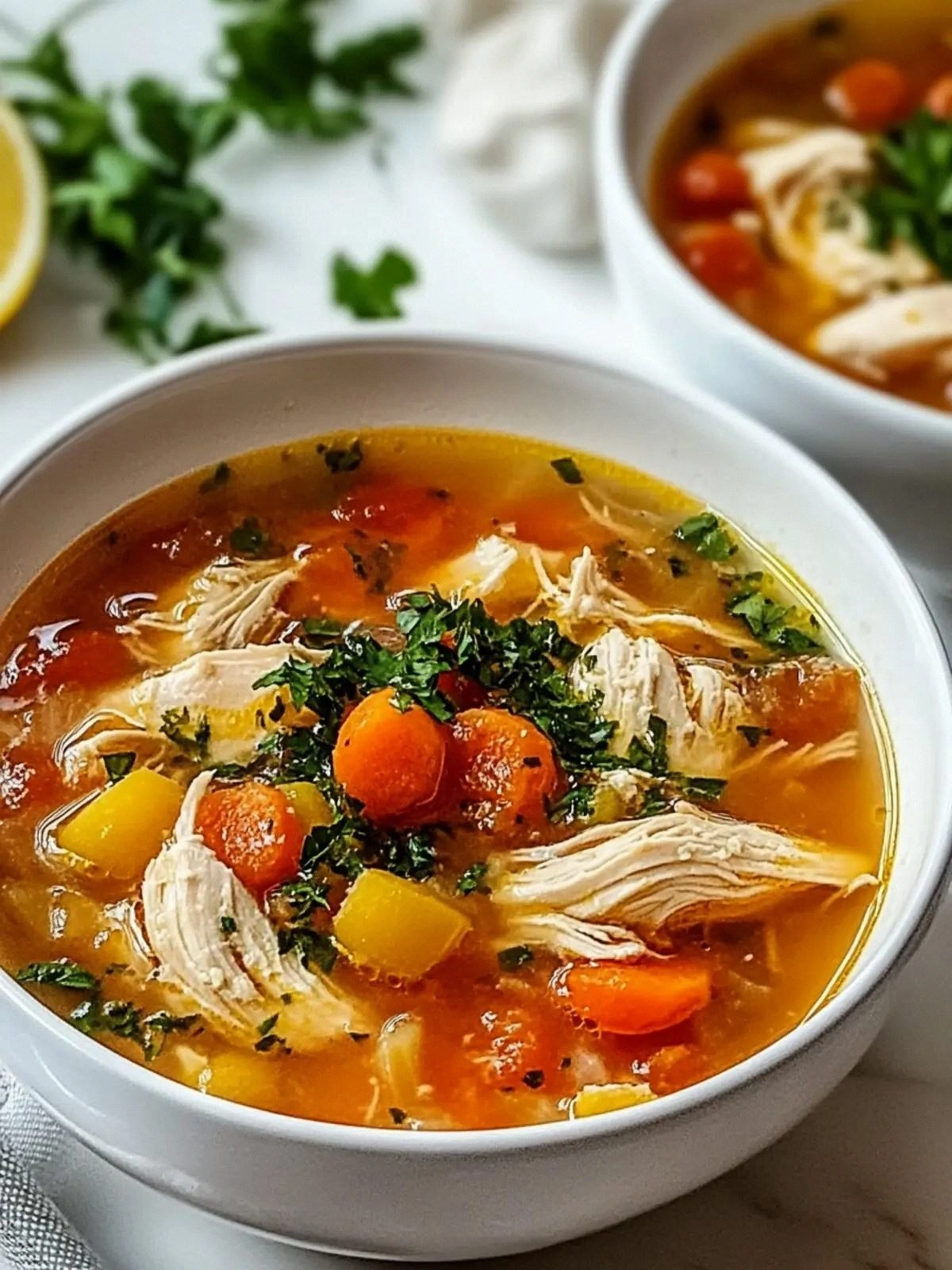
- Serve hot, ladling the soup into bowls and topping each with a generous sprinkle of fresh parsley. Pair it with crusty bread or a side of arugula salad for a complete meal. The first spoonful will reveal a harmonious blend of savory broth, tender chicken, crisp vegetables, and aromatic herbs. That sizzle when it hits the pan? Absolute perfection.
That’s it—you did it. But hold on, I’ve got a few more tricks that will take this to another level.
Insider Tricks for Flawless Results
The Temperature Rule Nobody Follows
Many cooks believe a high simmer is always better, but that can actually scorch the delicate flavors of the broth. Keep the heat low enough that the soup is gently bubbling; this preserves the subtle sweetness of the carrots and the depth of the tomatoes. If the pot starts to look dry, add a splash of water or broth to keep the liquid level steady. A friend once tried a high flame and ended up with a burnt bottom—let's just say the soup tasted like a charcoal grill.
Why Your Nose Knows Best
The aroma of your soup is the ultimate indicator of readiness. When the broth smells toasty and the vegetables are fragrant, it’s time to taste. A nose that can detect the subtle shift from raw to cooked will save you from over‑cooking or under‑seasoning. I’ve found that a quick sniff after each major addition keeps the flavor profile balanced.
The 5-Minute Rest That Changes Everything
After you remove the soup from heat, let it rest for five minutes before serving. This allows the flavors to settle and the chicken to reabsorb some of the broth’s juices. It also gives the vegetables a chance to soften just a bit more, creating a velvety mouthfeel. Skipping this step can leave the soup feeling a bit thin.
Keep the Bay Leaves
Bay leaves are meant to be removed before serving; leaving them in can make the soup bitter. I like to keep them in during the simmer and then take them out right before the final stir. If you forget, don’t panic—just strain the soup to remove the leaves. The bitterness is only mild, but a clean bowl is always preferable.
Use Fresh Herbs Over Dried
Fresh parsley and oregano deliver a bright, vibrant flavor that dried herbs can’t match. If you’re short on fresh herbs, use half the amount of dried and add a splash of lemon juice to brighten the dish. A friend once used dried oregano only and the soup tasted flat; the fresh herbs made all the difference.
Creative Twists and Variations
This recipe is a playground. Here are some of my favorite ways to switch things up:
Sausage & Peppers
Swap the chicken for sliced Italian sausage and add a handful of diced bell peppers. The sausage adds a smoky depth, while the peppers bring a sweet crunch that pairs wonderfully with the tomato broth. This version is perfect for a hearty dinner and feels like a trip to a bustling Italian trattoria.
White Wine & Lemon
Deglaze the pot with a splash of dry white wine after sautéing the aromatics. Finish with a squeeze of fresh lemon juice to brighten the broth. The wine adds a subtle acidity, and the lemon gives the soup a lively, citrusy finish that cuts through the richness.
Creamy Mushroom Variant
Add sliced mushrooms during the vegetable simmer for an earthy, umami boost. Stir in a tablespoon of sour cream or Greek yogurt at the end for a velvety texture. This version feels luxurious while staying grounded in the comforting base.
Spicy Calabrian Twist
Incorporate a handful of Calabrian chili flakes or diced roasted red peppers for a fiery kick. The heat pairs beautifully with the sweet carrots and savory broth, creating a complex flavor profile that excites the palate.
Vegetarian Adaptation
Omit the chicken and replace it with diced tofu or a handful of chickpeas. Use vegetable broth instead of chicken broth to keep the dish fully plant‑based. The result is a hearty, protein‑rich soup that satisfies vegetarians and meat‑eaters alike.
Coconut Twist
Swap the chicken broth for coconut milk and a splash of fish sauce to create a Thai‑inspired soup. Add lime leaves, ginger, and a few Thai basil leaves for an aromatic, tropical flavor. This version is a bold departure from the traditional, yet still deliciously comforting.
Storing and Bringing It Back to Life
Fridge Storage
Cool the soup to room temperature before transferring it to an airtight container. Store it in the refrigerator for up to five days. When you’re ready to eat, reheat gently on the stovetop or in the microwave, stirring occasionally to ensure even heating.
Freezer Friendly
Divide the soup into individual portions and place them in freezer‑safe containers or freezer bags. Freeze for up to three months. Thaw overnight in the refrigerator or use the defrost setting on your microwave before reheating.
Best Reheating Method
Add a splash of water or broth before reheating to prevent the soup from drying out. Heat over low heat, stirring frequently until it reaches your desired temperature. The tiny splash of liquid helps the broth regain its silky consistency.