Picture this: a cold, rainy Tuesday, the kind where you stare out the window and wonder if the universe is conspiring against your appetite. I was halfway through a marathon of Netflix documentaries when a sudden craving hit me like a bolt of culinary lightning – I needed something that felt like a hug, a blanket, and a standing ovation all at once. I raided the pantry, found a lone bag of elbow macaroni, a half‑used block of Gruyère, and a couple of onions that had been waiting for their moment of glory. I thought, “What if I could marry the soul‑warming depth of French onion soup with the creamy decadence of mac & cheese?” That was the spark, the dare I threw at myself: I’d create the ultimate comfort bowl and prove that indulgence can be elegant.
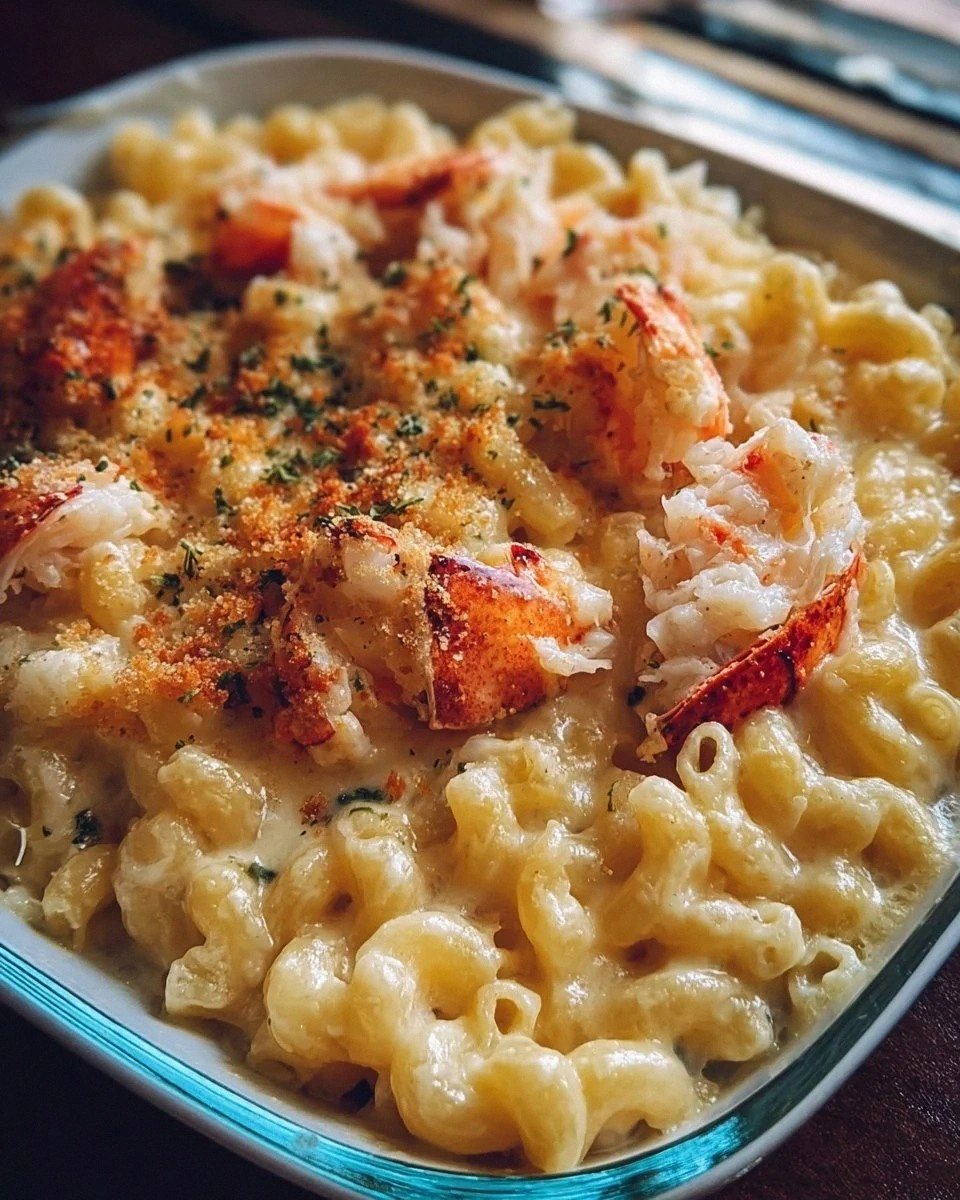
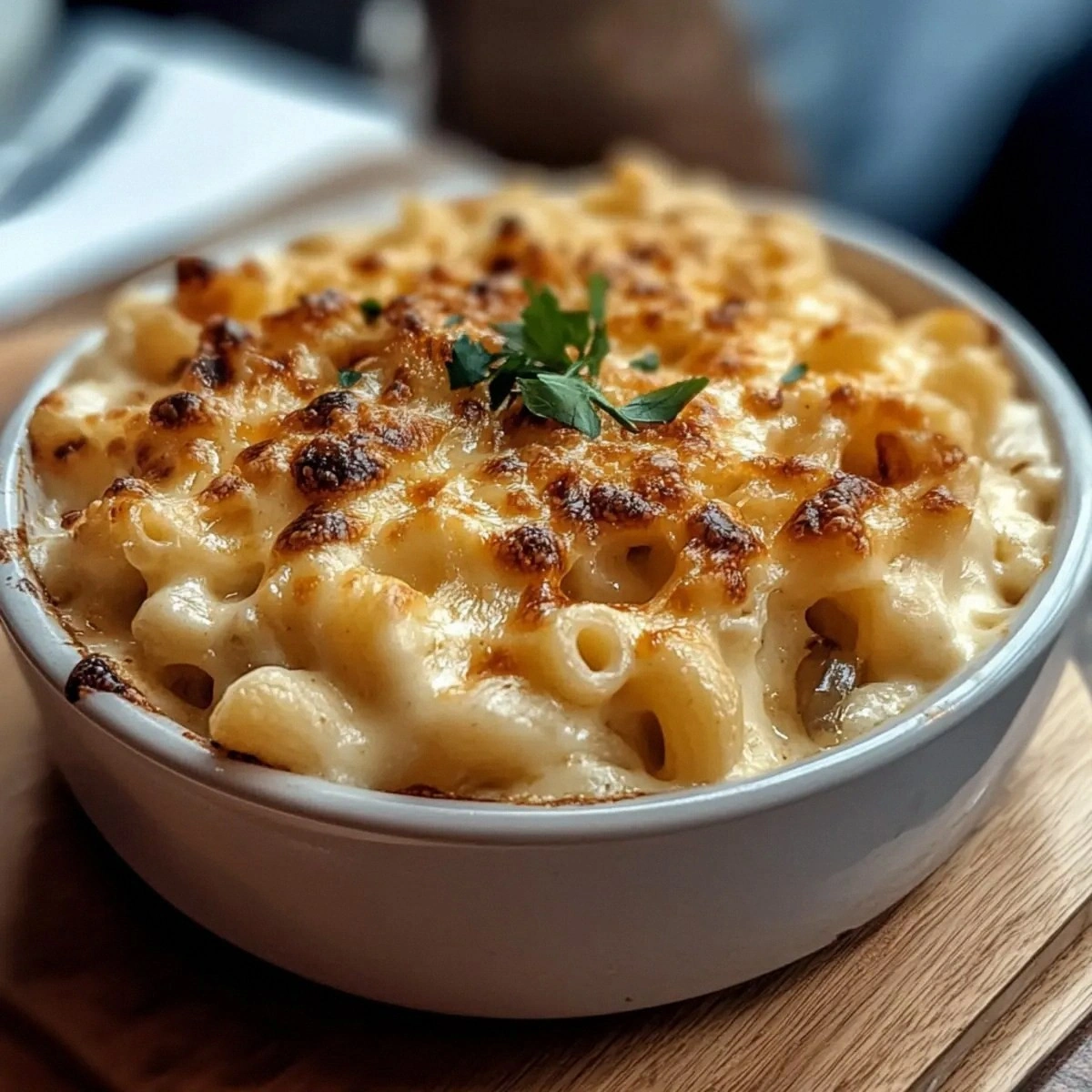
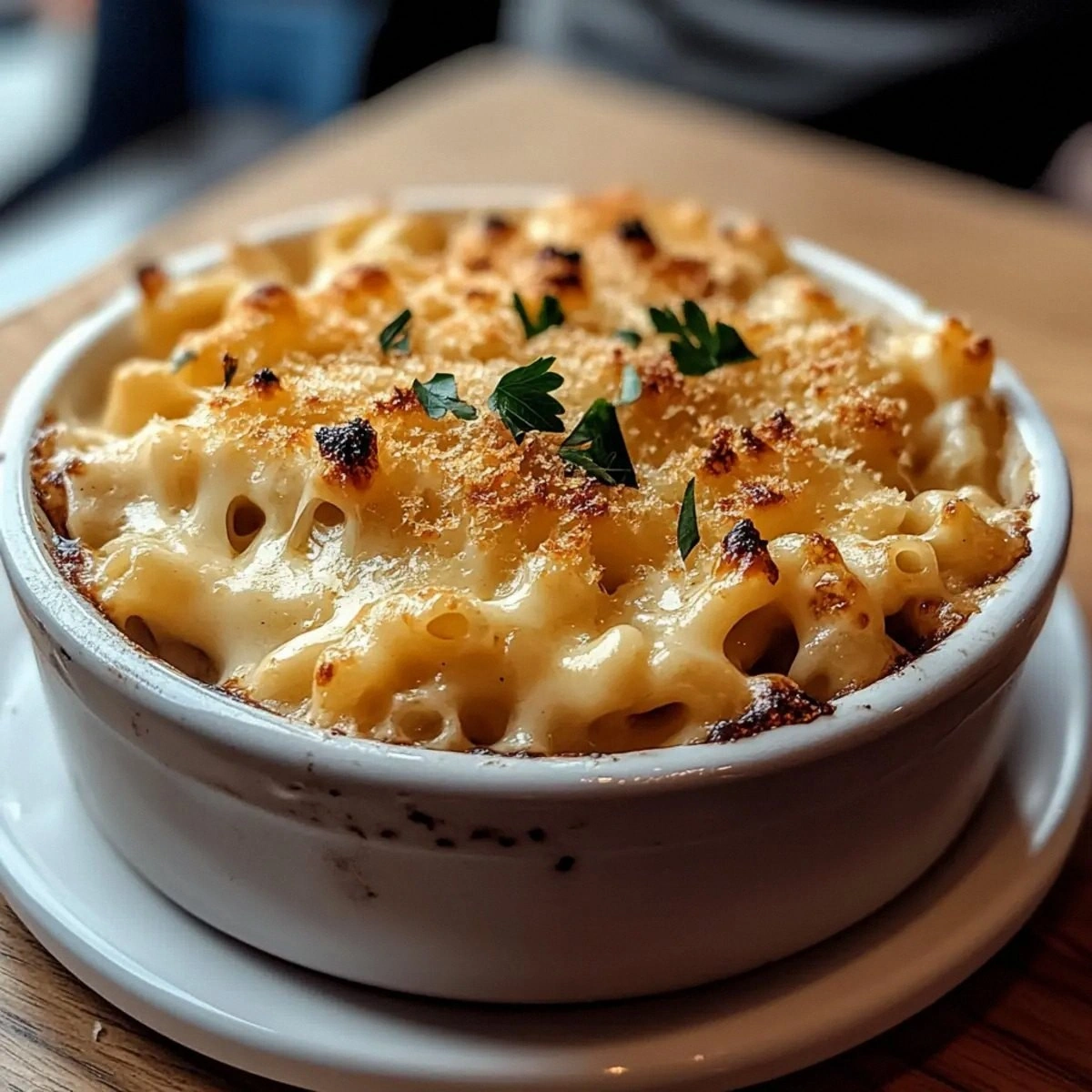
First, let’s set the stage. The kitchen filled with the sweet, caramel‑brown perfume of onions slowly turning amber, the sound of butter sizzling like applause, and the gentle hiss of flour being whisked into a glossy roux. My hands were covered in a buttery sheen, the countertop was speckled with flecks of cheese, and the oven’s warm glow promised a golden finish that would make even the most seasoned French chef nod in approval. As the sauce thickened, it clung to the pasta like velvet, each elbow curl becoming a tiny pocket of buttery, cheesy bliss. When the final layer of toasted baguette crunched under the fork, it shattered like thin ice, releasing a burst of smoky, caramelized flavor that sent my taste buds into a standing ovation.
Most recipes that try to fuse French onion soup with mac & cheese either drown the onions in cheese or end up with a soggy mess that feels more like a culinary tragedy than a triumph. I’ve tried a dozen variations that left me with a watery, bland casserole that barely earned a second glance. This version, however, flips the script: we caramelize the onions to their deepest, most umami‑rich point, we build a silky béchamel that’s enriched with heavy cream, and we crown the whole thing with a perfect blend of Gruyère and sharp white cheddar that melts into a glossy, buttery sheen. The result is a bowl that’s simultaneously rich, airy, and delightfully crunchy – hands down the best version you’ll ever make at home.
And now, the secret weapon: a splash of vegetable broth infused with a hint of thyme that lifts the entire dish without stealing the spotlight, plus a finishing touch of fresh parsley that adds a pop of color and a whisper of freshness. I dare you to taste this and not go back for seconds. Let me walk you through every single step — by the end, you’ll wonder how you ever made it any other way.
What Makes This Version Stand Out
- Depth: Caramelized onions bring a sweet‑savory depth that rivals any classic French onion soup, turning each bite into a layered experience.
- Texture: The sauce coats the pasta like velvet while the toasted baguette adds a crunch that shatters like thin ice.
- Simplicity: Despite the gourmet vibe, the recipe uses pantry staples and a handful of steps, making it approachable for any home cook.
- Uniqueness: The blend of Gruyère and sharp white cheddar creates a flavor duet that’s both nutty and tangy, unlike any standard mac & cheese.
- Crowd Reaction: Guests often claim they’ve never tasted anything this comforting yet sophisticated, prompting endless requests for seconds.
- Ingredient Quality: Using real butter, heavy cream, and good‑quality cheeses elevates the dish from ordinary to extraordinary.
- Cooking Method: Slow caramelization and a gentle bake ensure the sauce stays silky while the topping crisps perfectly.
- Make‑Ahead Potential: Assemble ahead of time, refrigerate, and bake when you’re ready – perfect for busy weeknights.
Inside the Ingredient List
The Flavor Base
Yellow Onions (3 medium): These are the heart of the dish. Their natural sugars develop into a deep, sweet caramel when cooked low and slow, providing the soup‑like backbone. If you skip them, you lose the signature umami that makes this bowl unforgettable. As a swap, try sweet Vidalia onions for an even richer caramel note.
Butter (4 tablespoons): Real butter, not margarine, gives the sauce its luxurious mouthfeel and carries the onion flavor. Using a salted butter can add a subtle seasoning boost, but be mindful of the overall salt balance.
Flour (2 tablespoons): The flour forms the roux, thickening the sauce without a starchy aftertaste. For gluten‑free diners, replace with an equal amount of cornstarch mixed with a little extra butter.
The Texture Crew
Elbow Macaroni (2 cups): Its ridges trap the sauce, ensuring every bite is drenched in cheesy goodness. You could swap for cavatappi or shells if you prefer a different shape, but keep the cooking time the same.
Heavy Cream (1 cup): This adds richness and a silky finish that milk alone can’t achieve. If you’re watching calories, substitute half with whole milk, but expect a slightly thinner sauce.
Gruyère Cheese (1 cup) & Sharp White Cheddar Cheese (1 cup): The Gruyère brings a nutty, slightly sweet depth, while the cheddar adds a sharp, tangy bite. Together they create a harmonious melt that’s both smooth and flavorful. For a smoky twist, swap half the Gruyère for smoked Gouda.
The Unexpected Star
Vegetable Broth (2 cups): It adds a savory backbone without overwhelming the onion flavor. Opt for a low‑sodium version to keep control over seasoning. If you’re a fan of herbs, stir in a sprig of thyme while the broth simmers for an extra aromatic layer.
The Final Flourish
Toasted Baguette Slices (1 cup): These provide the signature crunchy topping that mimics the croutons of traditional French onion soup. Make sure to toast them lightly before adding to the casserole; otherwise they’ll sog up during baking.
Fresh Parsley or Chives (2 tablespoons): A final sprinkle of green adds a bright, fresh contrast to the rich sauce, and the color makes the dish look restaurant‑ready. If you’re out of parsley, a dash of finely chopped basil works in a pinch.
Everything's prepped? Good. Let's get into the real action…
The Method — Step by Step
Slice the three yellow onions thinly, about the size of matchsticks. Melt the butter in a large, heavy‑bottomed skillet over medium heat. Once the butter foams, add the onions and a pinch of salt, then stir to coat. Reduce the heat to low and let the onions sweat for 10 minutes, stirring occasionally. This is the moment where the onions start to turn translucent, and the kitchen fills with that sweet, almost caramel perfume that tells you you’re on the right track. That sizzle when it hits the pan? Absolute perfection.
Increase the heat to medium‑high and continue cooking the onions, stirring every few minutes. After about 20‑25 minutes, they’ll reach a deep amber color, and you’ll notice the edges beginning to pull away from the pan – that’s the sign they’re fully caramelized. If you see any bits sticking, deglaze the pan with a splash of the vegetable broth, scraping up the browned bits; they’re flavor gold.
Kitchen Hack: Sprinkle a tiny pinch of sugar halfway through caramelization to accelerate browning without making the onions sweet.Once the onions are beautifully caramelized, push them to the side of the pan and add the flour to the cleared space, stirring constantly to form a roux. Cook the flour for about 2 minutes; you’ll see it turn a light golden hue and give off a nutty aroma. This roux is the foundation that will thicken our sauce without any lumps.
Gradually whisk in the vegetable broth, making sure to dissolve the roux completely. The mixture will bubble and thicken within minutes – keep stirring to avoid any scorching at the bottom. Once the broth is fully incorporated, lower the heat and let it simmer for 5 minutes, allowing the flavors to meld. Picture yourself pulling this out of the oven, the whole kitchen smelling incredible…
Stir in the heavy cream, then season with a pinch of freshly ground black pepper and, if needed, a dash more salt. Let the sauce simmer gently for another 3‑4 minutes until it reaches a silky, coat‑the‑back‑of‑a‑spoon consistency. This is the moment of truth – the sauce should feel luxurious, not watery.
While the sauce is simmering, bring a large pot of salted water to a boil and cook the elbow macaroni until it’s al dente, about 8 minutes. Drain, but reserve a cup of the pasta water – you’ll use it to loosen the sauce if it gets too thick. Toss the hot pasta straight into the sauce, stirring until each elbow is cloaked in creamy goodness.
Watch Out: Overcooking the pasta will cause it to absorb too much sauce, leaving the final dish dry. Keep it al dente.Preheat your oven to 375°F (190°C). Transfer the cheesy macaroni mixture into a greased 9‑x‑13‑inch baking dish. Sprinkle the grated Gruyère and sharp cheddar evenly over the top, then arrange the toasted baguette slices in a single layer. Drizzle a tiny bit of melted butter over the baguette for extra crunch.
Slide the dish into the oven and bake for 20‑25 minutes, or until the cheese on top is bubbling and the baguette slices have turned a deep golden brown. You’ll hear a gentle crackle as the crust forms – that’s the sound of perfection. If you love an extra caramelized top, switch the oven to broil for the last 2 minutes, but watch closely to avoid burning.
Remove the casserole from the oven and let it rest for 5 minutes – this allows the sauce to set and prevents it from spilling everywhere when you serve. Sprinkle the fresh parsley or chives over the surface for a pop of color and a fresh, herbaceous finish. Serve hot, and watch as your guests dive in, their faces lighting up with each forkful. I’ll be honest — I ate half the batch before anyone else got to try it.
That's it — you did it. But hold on, I've got a few more tricks that'll take this to another level...
Insider Tricks for Flawless Results
The Temperature Rule Nobody Follows
Never add the cheese while the sauce is scorching hot. Let the sauce cool to a gentle simmer before folding in the Gruyère and cheddar; this prevents the cheese from separating and ensures a smooth, glossy finish. I once tried adding cheese at a rolling boil and ended up with a grainy texture that tasted like curdled milk. Trust me, a little patience pays off.
Why Your Nose Knows Best
The moment the onions start to turn golden is the exact point you should stop stirring and let them sit for a minute. Your nose will pick up a sweet, nutty aroma that signals the perfect caramelization level. If you keep stirring, you risk breaking down those caramelized bits and losing that depth. Let the scent guide you.
The 5‑Minute Rest That Changes Everything
After baking, resist the urge to dive in immediately. Let the casserole rest for exactly five minutes; this short pause lets the sauce thicken further and the flavors meld, giving you a cleaner plate and a more cohesive bite. Skipping this step results in a runny bowl that looks sad on the plate.
Cheese Blend Mastery
Using a blend of Gruyère and sharp white cheddar isn’t just for flavor complexity; it also balances meltability. Gruyère melts beautifully but can become oily if overcooked, while cheddar provides structure. If you want a smokier profile, replace a quarter of the Gruyère with smoked Gouda – it adds a subtle depth without overpowering the onion base.
Pan Size Matters
A wide, heavy‑bottomed skillet ensures even caramelization of the onions. A narrow pan concentrates heat, causing uneven browning and possible burning. I once used a small sauté pan and ended up with burnt onion bits that ruined the whole sauce. Invest in a good sauté pan – it’s worth it.
Creative Twists and Variations
This recipe is a playground. Here are some of my favorite ways to switch things up:
Truffle‑Infused Elegance
Swap half the heavy cream for truffle cream and add a drizzle of truffle oil just before serving. The earthy aroma elevates the dish to a fine‑dining experience, perfect for a special occasion.
Spicy Southwest
Stir in a teaspoon of chipotle in adobo sauce with the broth, and replace the baguette topping with crushed tortilla chips. The smoky heat pairs beautifully with the sweet onions, creating a bold, unexpected flavor.
Veggie‑Packed Power
Add sautéed mushrooms, wilted spinach, or roasted cauliflower to the pasta before baking. These vegetables not only boost nutrition but also add texture contrast that makes each bite more interesting.
Breakfast Remix
Swap the elbow macaroni for cooked quinoa, fold in scrambled eggs, and top with crispy bacon bits. This version works wonderfully as a hearty brunch that still carries the comforting onion‑cheese vibe.
Vegan Version
Replace butter with olive oil, flour with gluten‑free flour blend, heavy cream with coconut cream, and both cheeses with vegan shreds. Use vegetable broth fortified with nutritional yeast for that umami punch. The result is surprisingly close to the original, proving that dairy‑free can still be decadent.
Storing and Bringing It Back to Life
Fridge Storage
Allow the casserole to cool completely, then cover tightly with foil or a reusable lid. It will keep fresh for up to 4 days in the refrigerator. When reheating, place a splash of water or broth in the dish, cover with foil, and warm in a 350°F oven for 20‑25 minutes; this restores the creamy texture.
Freezer Friendly
Portion the baked casserole into freezer‑safe containers, leaving a small gap for expansion. Freeze for up to 2 months. To reheat, thaw overnight in the fridge, then bake at 375°F for 30‑35 minutes, uncovered, until the top is golden and the interior is bubbling.
Best Reheating Method
The secret to reviving this dish is steam. Add a tablespoon of water or broth to the surface before reheating, cover loosely with foil, and bake. The steam prevents the sauce from drying out, and the topping regains its crispness without becoming soggy.